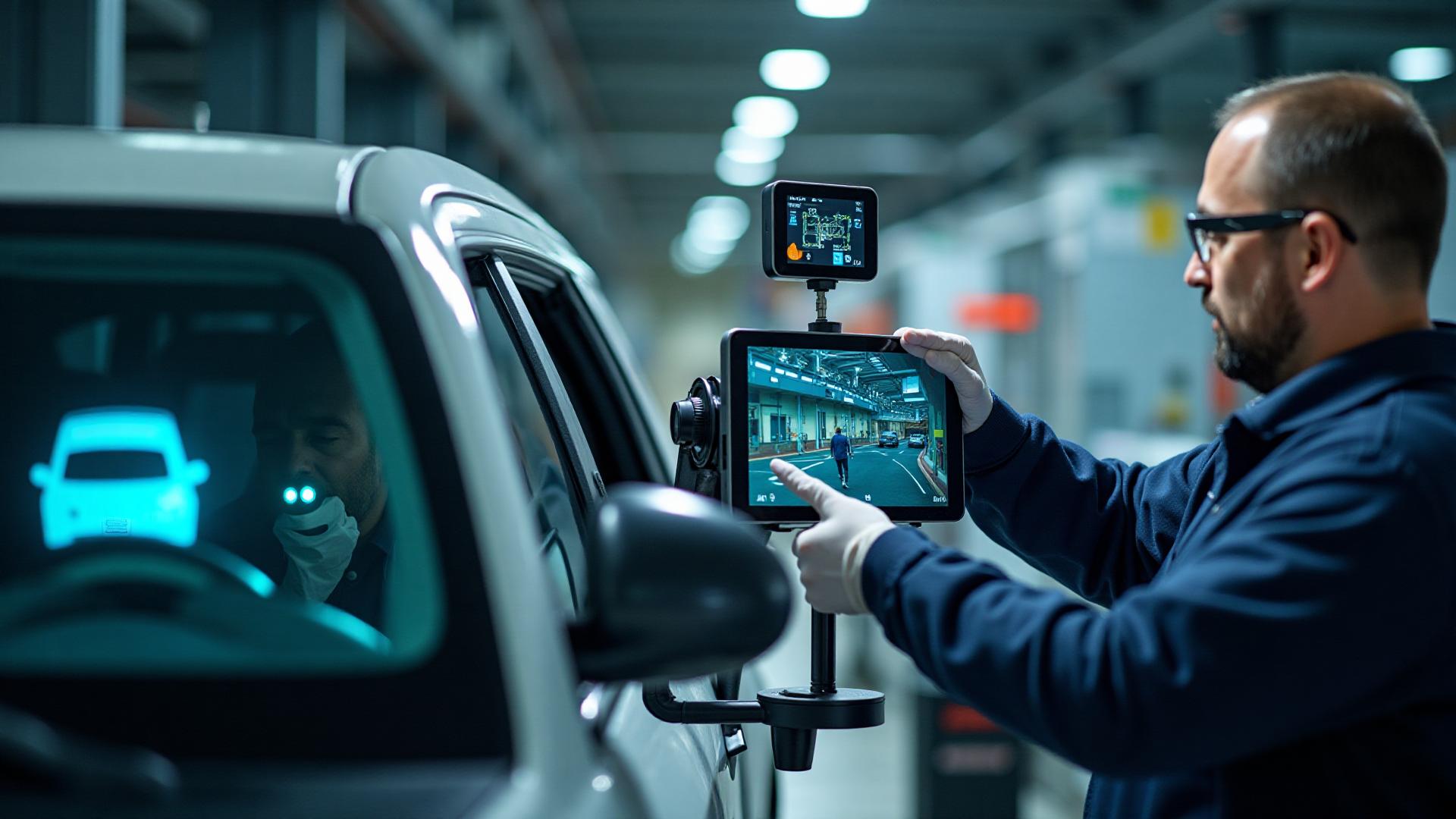
ADAS Calibration Specialists in Stafford
Vehicle-specific camera, radar and sensor calibration after windscreen replacement, collision repair, wheel alignment or suspension work where the manufacturer procedure requires it.
Calibration carried out using appropriate equipment and applicable manufacturer procedures.
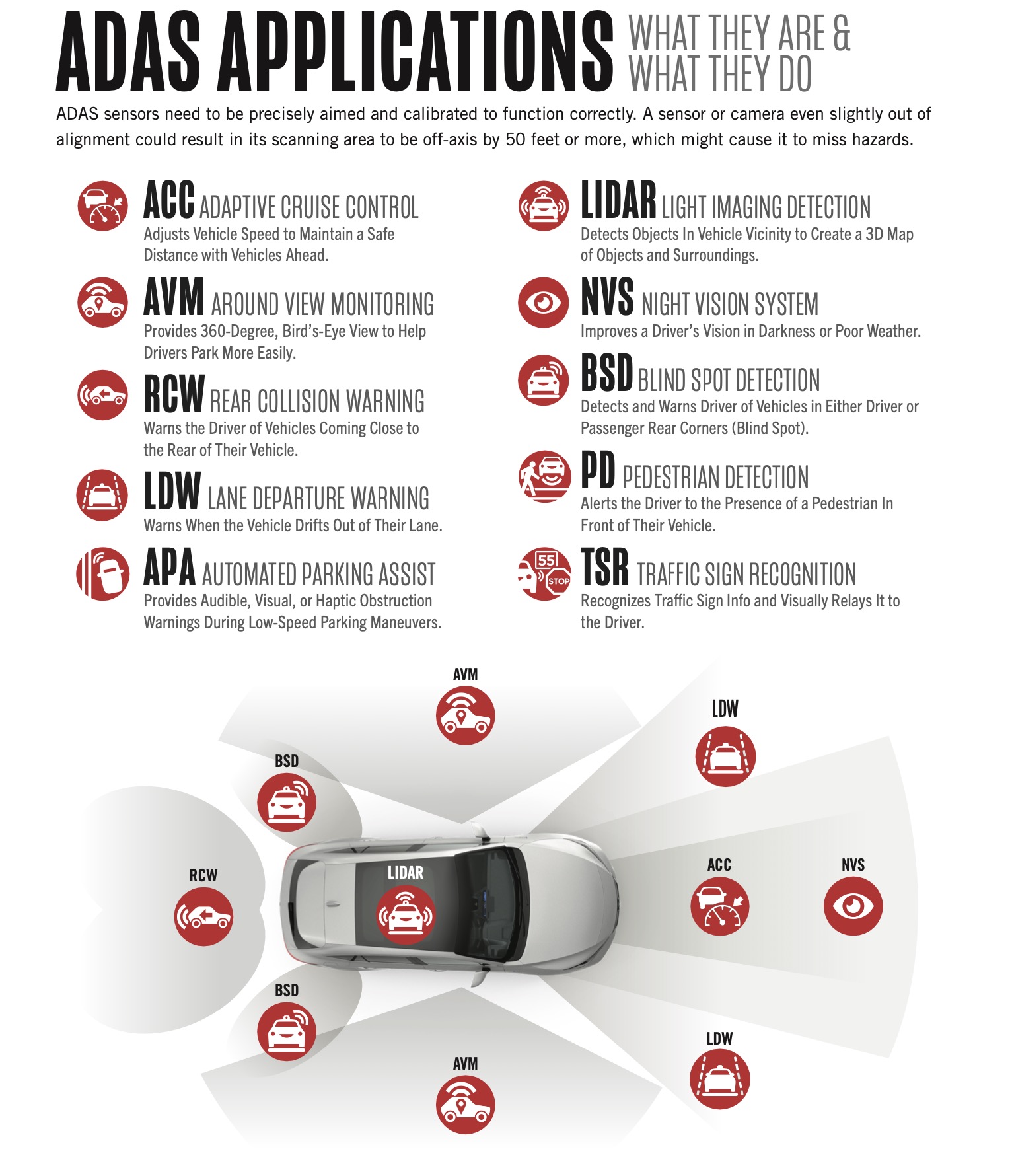
ADAS sensors need to be precisely aimed and calibrated to function correctly
What is ADAS?
ADAS stands for Advanced Driver Assistance Systems. These are the safety technologies built into modern vehicles that help you drive more safely every day.
Using cameras, radar, and sensors positioned around your vehicle, ADAS systems monitor the road and surroundings. They can warn you of hazards, assist with steering, and in some cases take action automatically to help prevent accidents.
Most vehicles manufactured from around 2015 onwards have some form of ADAS. You may be driving with more safety technology than you realise.
Cameras
Windscreen mounted, rear, and surround view
Radar
Front and rear facing for distance detection
Ultrasonic Sensors
Bumper mounted for parking assistance
Common ADAS Features
These systems work in the background to help keep you safe. You may have some or all of these depending on your vehicle.
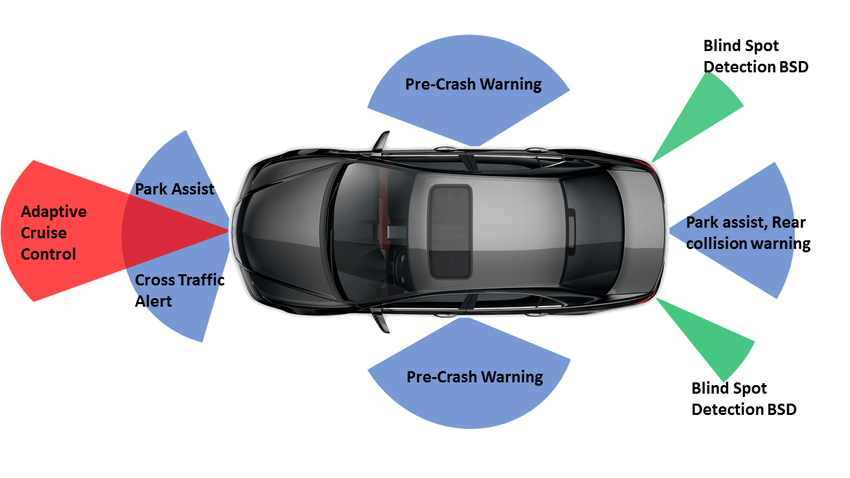
How ADAS systems monitor the road around you
Lane Keeping Assist
Uses cameras to monitor lane markings and gently steers if you begin to drift. Helps prevent unintentional lane departure, particularly on long journeys.
Automatic Emergency Braking
Radar and cameras scan ahead for obstacles. If a collision is detected and you do not react in time, the system applies the brakes automatically.
Adaptive Cruise Control
Monitors traffic ahead and adjusts your speed to maintain a safe following distance. Reduces driver fatigue in varying traffic conditions.
Blind Spot Monitoring
Radar sensors detect vehicles in your blind spots and alert you with a warning light in your mirror, helping you change lanes safely.
Parking Sensors and Cameras
Ultrasonic sensors and cameras provide audio and visual warnings when reversing or manoeuvring in tight spaces, helping you avoid low speed collisions.
Traffic Sign Recognition
A forward facing camera reads road signs and displays them on your dashboard. Helps you stay aware of speed limits and other road information.
Why Calibration Matters
ADAS cameras and sensors need to be positioned with millimetre precision. Even small misalignments can affect how these systems work.
If a forward facing camera is slightly off, it may not detect a pedestrian stepping into the road in time. Emergency braking could activate too late, or lane keeping assist might steer you incorrectly.
After certain repairs or adjustments to your vehicle, calibration ensures these systems are realigned to manufacturer specifications and working as intended.
A practical example
After a windscreen replacement, the forward facing camera position may have changed slightly. Without recalibration, your automatic emergency braking might react a fraction of a second too late.
At 30 mph, that fraction of a second translates to several metres of stopping distance.
When ADAS Calibration is Needed
If you are unsure whether your vehicle needs ADAS calibration, contact us. We can advise based on the work carried out and your vehicle's systems.
How We Calibrate ADAS
Calibration is carried out to manufacturer specifications using proper equipment.
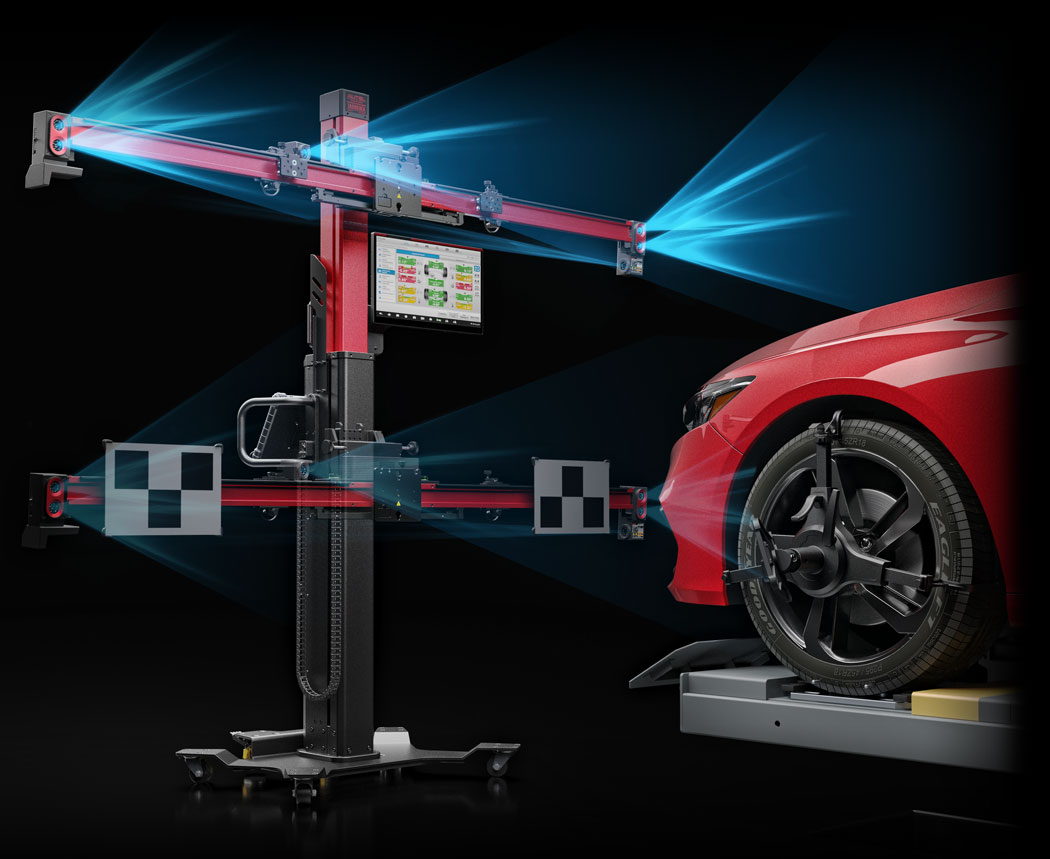
Precision calibration to manufacturer specifications
Preparation
Vehicle positioned on level ground with correct tyre pressures and fuel level checked
Calibration
Using manufacturer approved targets and equipment to realign cameras and sensors
Verification
System checked and confirmed working correctly before handover
Common Questions
Specialist support from Zooch Automotive
For suitable repair work, Bodymatters works with nearby Zooch Automotive in Stafford for precision four-wheel alignment, ADAS calibration, vehicle diagnostics and coding support.
Learn about Zooch Automotive’s ADAS and alignment servicesQuestions About ADAS Calibration?
Contact us if you are unsure whether your vehicle needs calibration. We can advise based on the repair and your vehicle's systems.